Difference between revisions of "Global Informality Project"
Jump to navigation
Jump to search
| Line 38: | Line 38: | ||
<div id="mainpage-users" title="Users"> | <div id="mainpage-users" title="Users"> | ||
<strong class="mainpage_boxcontents_title">Latest additions to the database</strong> | <strong class="mainpage_boxcontents_title">Latest additions to the database</strong> | ||
*[[Ta'arof (Iran)]] | |||
*[[Palanca (Mexico)]] | *[[Palanca (Mexico)]] | ||
*[[Ściągnąć (Poland)]] | *[[Ściągnąć (Poland)]] | ||
*[[OBON (Kyrgyzstan)]] | *[[OBON (Kyrgyzstan)]] | ||
*[[Vrtičkarstvo (Slovenia)]] | *[[Vrtičkarstvo (Slovenia)]] | ||
<strong class="mainpage_boxcontents_title">Have you read...?</strong> | <strong class="mainpage_boxcontents_title">Have you read...?</strong> | ||
Revision as of 12:59, 26 March 2019
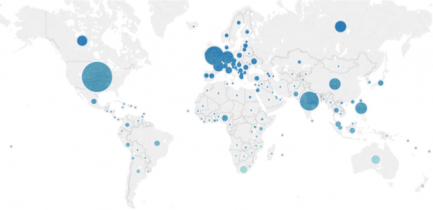
The Global Informality Project is a leading online resource for the world's open secrets, unwritten rules and hidden practices, broadly defined as 'ways of getting things done.' This global and growing collection of invisible, yet powerful informal practices is made possible by remarkable collaboration of scholars from five continents. The project:
- connects those interested in informality
- serves as a teaching and learning database for the academic community, policy makers, businesses and the public
- enables context-rich analysis and comparison of practices from all over the world

ABOUT
The Global Informality Project at a glance
The collection of informal practices
NEW
Latest additions to the database
Have you read...?
- Vote buying / Vote selling (Western Balkans)
- Our entries published in 2018 and 2019
JOIN
Join the Global Informality Project
Join our network of informality

|

|

|

|

|

|

|

|

|
INFORM has received funding from the European Union's Horizon 2020 research and innovation programme under grant agreement No 693537. |